What Are Polyphenols?
 But first, what are they? And what’s the big deal about it? Polyphenols are naturally occurring compounds found in plants. They function as antioxidants, protecting your cells from damage caused by free radicals. Free radicals are unstable molecules that build up through normal metabolism, sun exposure, pollution, and processed foods. When they accumulate faster than your body can neutralize them, they contribute to chronic inflammation. Diets rich in polyphenols have been linked to lower risk of heart disease, better blood sugar control, and improved gut health. A 2018 meta-analysis in Critical Reviews in Food Science and Nutrition found that polyphenol-rich olive oil significantly improved cardiovascular risk markers. Those improvements included lower oxidized LDL, reduced total cholesterol, and higher HDL cholesterol. A separate review of randomized controlled trials confirmed these findings across multiple studies. That body of research is part of why regulators have started paying attention. The European Food Safety Authority (EFSA) has approved a specific health claim for olive oil polyphenols. It states that they contribute to the protection of blood lipids from oxidative stress. To qualify, the oil must contain at least 5 mg of hydroxytyrosol and its derivatives per 20 grams.
 Disclaimer: The EFSA health claim referenced in this article is a European regulatory standard. It has not been evaluated or adopted by the U.S. Food and Drug Administration. This content is for informational purposes and should not replace professional medical advice.
High Polyphenol Foods You Can Add to Your Diet
So what foods are high in polyphenols? More than you might expect. These are everyday foods that you have most likely integrated into your diet already. Berries are some of the richest polyphenol sources around. Blueberries, blackberries, strawberries, and raspberries all deliver high concentrations of anthocyanins. That’s the type of polyphenol responsible for their deep color. Dark-skinned grapes, cherries, and plums are close behind. Aside from fruit, dark chocolate with 70% cacao or higher, green tea, coffee, and red wine all contain meaningful amounts. Vegetables like artichokes, red onions, and spinach contribute as well. Nuts, seeds, and whole grains round out the list. The common thread is color and minimal processing. The more colorful and unrefined the food, the more polyphenols it tends to retain.High Polyphenol Olive Oils
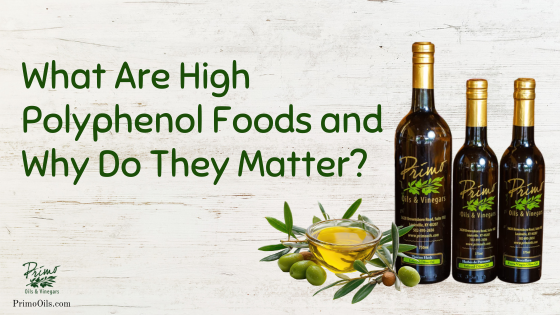
Extra virgin olive oil stands out as one of the most polyphenol-dense foods you can cook with daily. Not all olive oils are equal here, though. Polyphenol content depends on the olive variety, harvest timing, and how quickly the fruit is pressed. High polyphenol extra virgin olive oil tends to come from varieties like Coratina, Chetoui, and Picual – all varieties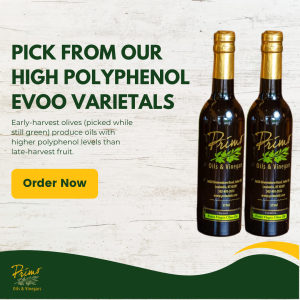 we carry at their peak freshness here at Primo Oils. Early-harvest olives (picked while still green) produce oils with higher polyphenol levels than late-harvest fruit. You can often taste the difference. Oils rich in polyphenols tend to have a peppery, slightly bitter finish that catches the back of your throat. That sensation comes from oleocanthal, a compound with anti-inflammatory properties. If your olive oil tastes completely smooth and neutral, it’s likely lower in polyphenols. That said, if you’d like to try a high polyphenol olive oil, we recommend grabbing either a bottle of our Chetoui or Coratina EVOO. These are two of the most polyphenol-rich oils we carry. Better yet, try before you buy! We offer free tastings in our physical store in Louisville, KY!
 Balsamic Vinegar
Balsamic vinegar is made from grape must, and grapes are one of the most polyphenol-rich fruits on the planet. So it makes sense that traditional balsamic carries a solid dose of gallic acid, catechins, and other phenolic compounds with antioxidant properties.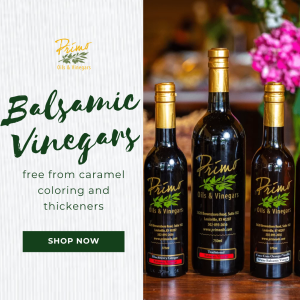 A 2019 study we found tested 23 different vinegars, and balsamic Vinegar of Modena scored the highest antioxidant activity of the entire group. Roughly 45% of traditional balsamic’s antioxidant power comes directly from its polyphenolic fraction. But quality matters the most here. Mass-produced balsamic vinegars made with caramel coloring and thickeners won’t deliver the same benefits as traditionally made versions aged in wooden barrels. You can learn more about whether balsamic vinegar is good for you and its associated health benefits in our other articles.
 How Much Polyphenol Per Day Is Healthy?
No single recommended daily intake exists for polyphenols. The research is still catching up, but that doesn’t mean you can’t make the most of what we already know. Where we do have solid numbers is olive oil. So, let’s rephrase this question: how much high polyphenol olive oil per day is healthy? The EFSA health claim is based on a daily intake of 20 grams of qualifying EVOO, which works out to roughly 1.5 tablespoons. Most nutrition researchers suggest one to two tablespoons per day as a practical target for overall health benefits. While we don’t have a universal number (yet) for how m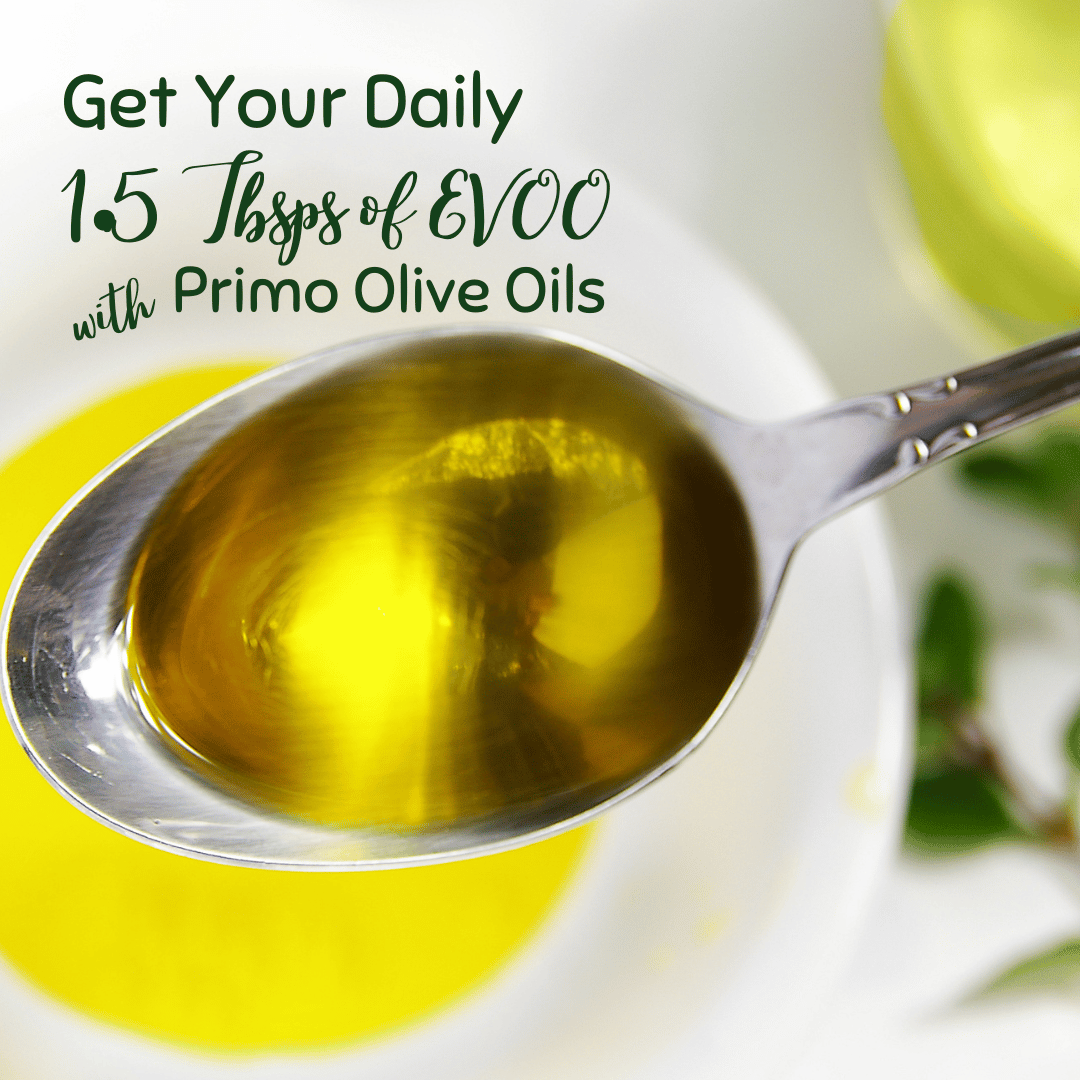 uch polyphenol per day is ideal, 1.5 tablespoons of EVOO is a solid baseline for the benefits to kick in. What most health-conscious foodies like to do is swap in EVOO as a healthier alternative to butter, margarine, or refined vegetable oils. The calorie count is roughly the same across the board, but you get overall better nutrition. You’re replacing saturated and trans fats with heart-healthy monounsaturated fat, plus you’re getting polyphenols that those other oils simply don’t have. At Primo, we use EVOO for everything – sautéing, dressing salads, bread dips, or drizzling it over finished dishes. We’re not really interested in maximizing the polyphenols every time we cook. Instead, the consistency of using EVOO in small quantities adds up more than any single large dose.
 How to Preserve Polyphenols in Olive Oil and Balsamic Vinegar
Three things break polyphenols down faster than anything else. The good news is that they’re all very easy to manage.Light Exposure
Light exposure, more specifically, UV light, is one of the fastest ways to strip polyphenols from your olive oil. A 2025 study tracked EVOO stored under light versus dark conditions over 24 months. The light-exposed oil lost roughly 60% of its oleocanthal and 75% of its oleacein, two of the most beneficial polyphenols in olive oil. Those changes were irreversible. Another separate study found similar losses in just 11 weeks under simulated market lighting. So it’s best to store your oil in a dark cabinet or pantry, and choose bottles made from dark glass or tin whenever possible.Heat Exposure
Prolonged exposure to high temperatures degrades polyphenols faster than almost anything else. A study in the Journal of Agricultural and Food Chemistry heated EVOO at 180°C and found that polyphenols and tocopherols showed the highest degradation rate of all compounds tested. Even moderate warmth takes a toll. Another study tracked polyphenol decline across storage temperatures from 25°C to 60°C and confirmed that warmer conditions accelerate the breakdown significantly. However, this doesn’t mean you can’t cook with EVOO. It handles normal sautéing and pan-frying temperatures well. But storing your bottle next to the stove or above the oven will quietly erode its beneficial compounds over time.Oxidation
Oxygen triggers oxidation, which degrades both flavor and polyphenol content. A 2025 study on the Coratina olive cultivar (also one of the varieties we carry at Primo) found that cold storage effectively slowed polyphenol breakdown, but only as long as oxygen exposure remained limited. Once air gets in, even the most ideal temperatures can’t fully protect the oil. As such, we always recommend sealing the cap tightly after each use, then keeping it sealed in a cool, dark place. If you buy a large bottle and don’t cook daily, consider pouring some into a smaller container to reduce the air space inside. Balsamic vinegar is more forgiving here thanks to its high acidity, but the same principle applies. You can also check out our proper storage guide for olive oils. We cover a lot more information on this page.Recipes Featuring High Polyphenol Olive Oil and Balsamic Vinegar
The easiest way to get more polyphenols into your diet is to cook with ingredients that are naturally rich in them. We already have a few recipes we can recommend to you!Bread Dip with Polyphenol-Rich EVOO
Bread dips are one of the easiest ways to work more polyphenols into your day. Pour a shallow dish of your best EVOO, add a splash of aged balsamic vinegar, and sprinkle in some sea salt and crushed red pepper. That’s about it. This puts the oil’s flavor and high polyphenol olive oil benefits front and center with zero cooking involved. If you want to mix it up, our Chetoui Organic EVOO brings a bolder, peppery kick, while our Frantoio keeps things smooth and mellow. Our full bread dip guide has more variations on this recipe.Balsamic Glazed Vegetables
This one’s just as simple. Drizzle EVOO over your favorite vegetables before they go in the oven. You can use Brussels sprouts, sweet potatoes, cauliflower, or whatever you’ve got on hand. In the last five minutes, brush them with a dark balsamic vinegar and let it caramelize. You’re getting polyphenols from both the oil and the vinegar in a single side dish, and it takes maybe thirty seconds more of extra effort.Simple Polyphenol-Rich Vinaigrette
If you love salads, you’re going to use this recipe often! Whisk three parts EVOO with one part balsamic vinegar, a pinch of salt, and a squeeze of lemon. Works on salads, grain bowls, or as a quick marinade for chicken or fish. The raw oil retains its full polyphenol content, and the balsamic adds its own antioxidant contribution. Our Manzanillo and Coratina high polyphenol olive oils both work well here if you want the oil’s flavor to come through in the dressing.Ready to stock your pantry with high polyphenol olive oils?
Well, you’re already in the right place! Primo Oils carries some of the most premium olive oils and balsamic vinegars in Louisville, Kentucky. And every bottle is genuine extra virgin, sourced from small-batch producers we trust and tasted by our team before it hits the shelf. If you’re looking for the highest polyphenol counts we carry, start with our Chetoui and Coratina EVOO. They pair beautifully with any of our balsamic vinegars for dressings, dips, and glazes. Browse the full selection in the Primo Shop, or stop by our Louisville store to taste before you buy a bottle (or two). You won’t regret it!
$5 Off Your First Order of $50
or more when you sign up for our newsletter.